Your Custom Text Here
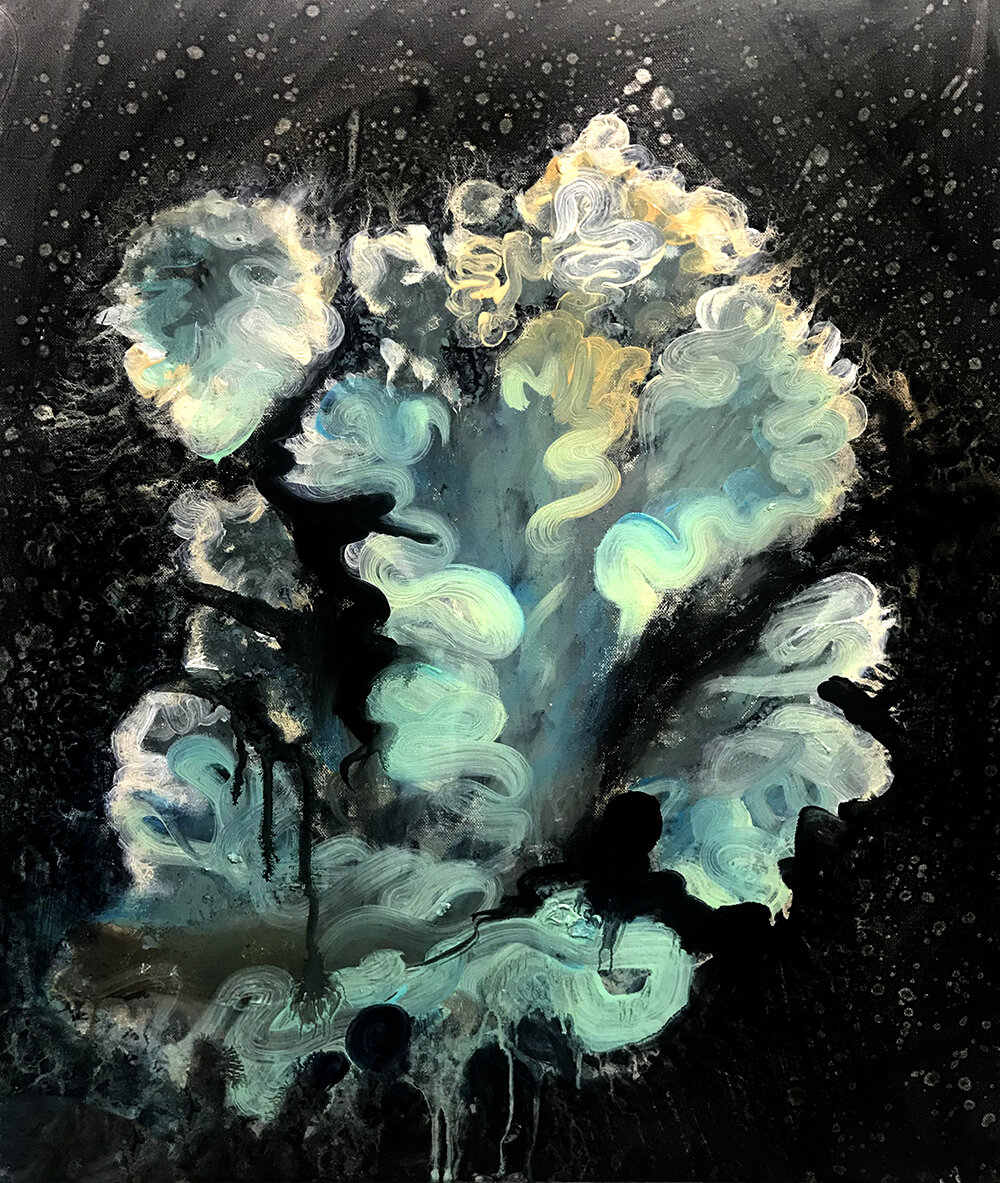
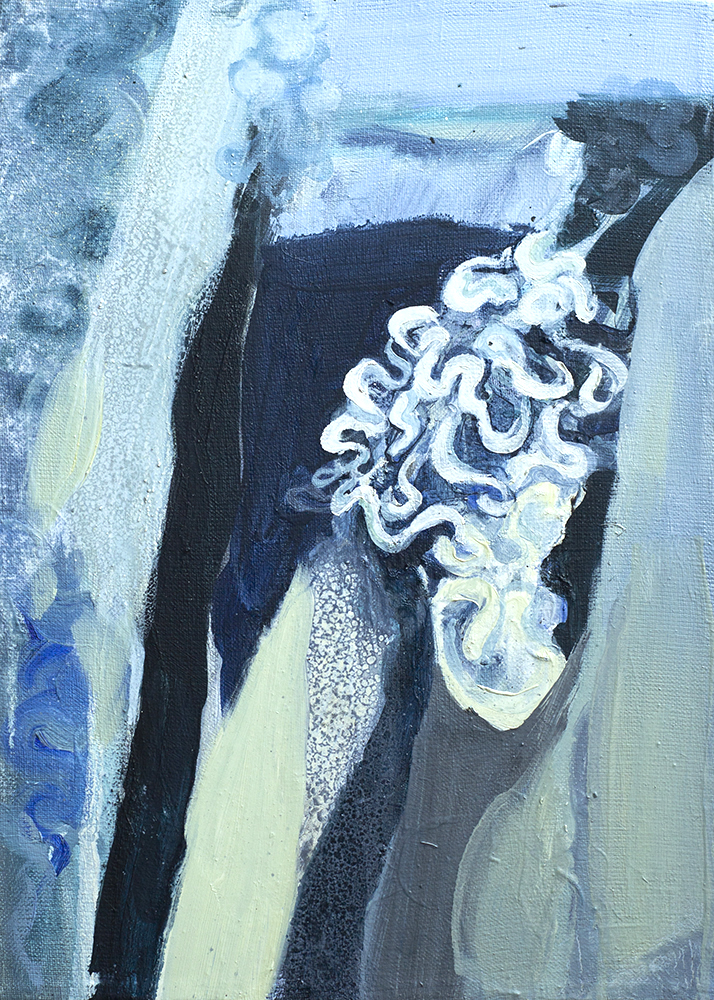
Emerging from Wilderness Secrets, Morphosis marks a shift from attentive observation to painterly transformation. While the earlier series remained rooted in identifiable mosses and lichens, here the organic source dissolves. What once belonged to the forest floor now enters a state of continuous becoming.
Wawrzyniuk immerses herself in the internal logic of growth, allowing forms to expand, mutate, and lose their botanical specificity. Species are no longer recognisable. Instead, the viewer encounters clusters of pulsating structures, fluid contours, and luminous bodies suspended against dark, indeterminate spaces.
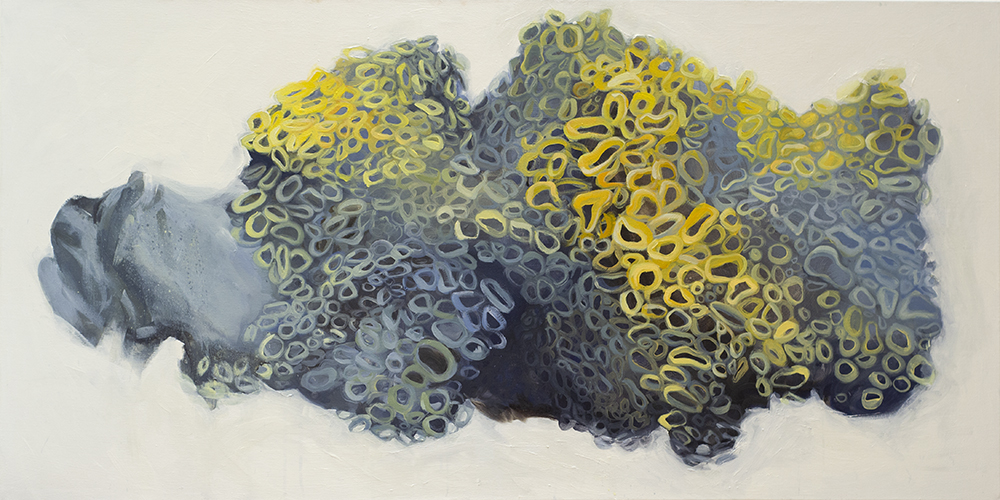
Colour becomes more intense and atmospheric. Greens, aquamarines, and pale yellows seem to emit their own light, while deep blacks absorb and frame the emergence of these biomorphic constellations. The paintings suggest processes rather than objects — formations caught in transition, as if the canvas records a moment within an ongoing transformation.
In Morphosis, nature is not depicted but reimagined. The works move toward abstraction without severing their organic origin, proposing a vision of life as unstable, porous, and perpetually in flux.
oil on canvas, 60x50cm, 2020
oil on canvas, 40x50cm, 2020
oil on canvas, 20x30 cm, 2018
oil on canvas, 160x80 cm, 2018
oil on canvas, 3 pieces 20x20 cm, 2018
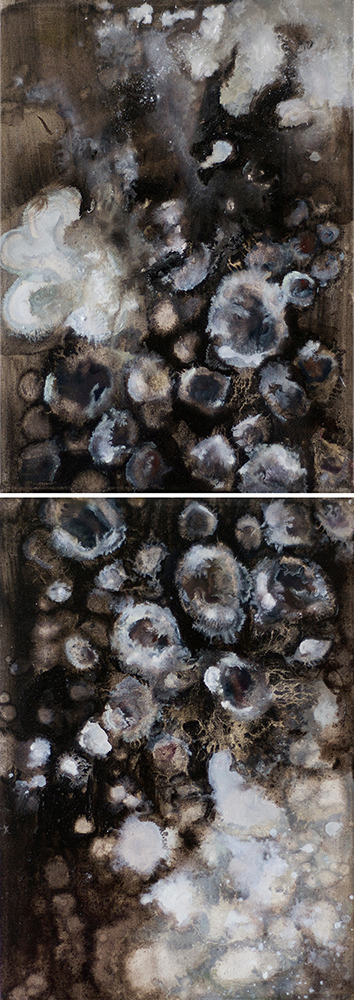
diptych, oil on canvas, 60x20 cm, 2017
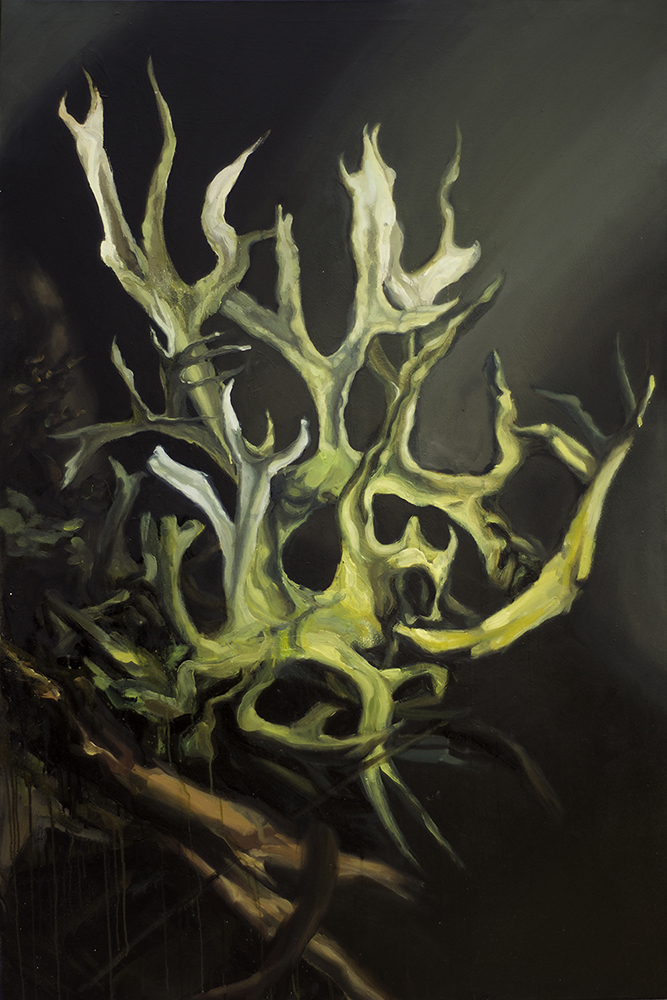
oil on canvas, 50x70 cm
Wilderness Secrets is a series of oil paintings that explores the hidden life of the forest floor. Mosses and lichens — organisms growing quietly beneath our feet — often remain unnoticed, despite slowly overtaking fallen trunks, decaying branches, and the remnants of fauna and flora.
By isolating and enlarging these modest life forms, Wawrzyniuk reveals their astonishing complexity. What at first appears insignificant unfolds into a world of intricate structures, undulating silhouettes, and subtle chromatic shifts. The paintings move between attentive observation and painterly transformation, allowing organic forms to hover between recognition and abstraction.
Rooted in species found in the artist’s motherland, the series gradually departs from strict naturalism. Early works are grounded in earthy, subdued tones that echo the damp forest environment. In later paintings, however, colour becomes increasingly luminous and otherworldly. Greens intensify, backgrounds dissolve into deep blues or velvety darkness, and the forms begin to glow as if emerging from memory or dream rather than direct sight.
Rather than documenting botanical reality, Wilderness Secrets invites the viewer into an intimate encounter with the overlooked. It proposes a slower mode of looking — one that acknowledges the quiet persistence, resilience, and quiet drama of the smallest living structures.
oil on canvas, 100x140 cm, 2017
oil on canvas, 100x150 cm, 2017
oil on canvas, 135x100 cm, 2017
oil on canvas, 100x140 cm, 2018
oil on canvas, 100x150 cm, 2018
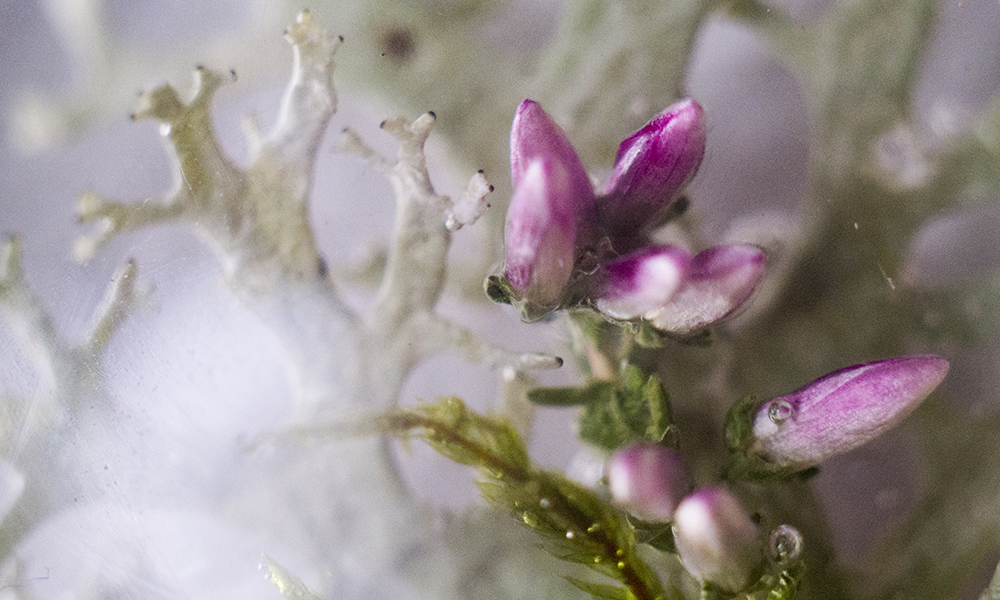
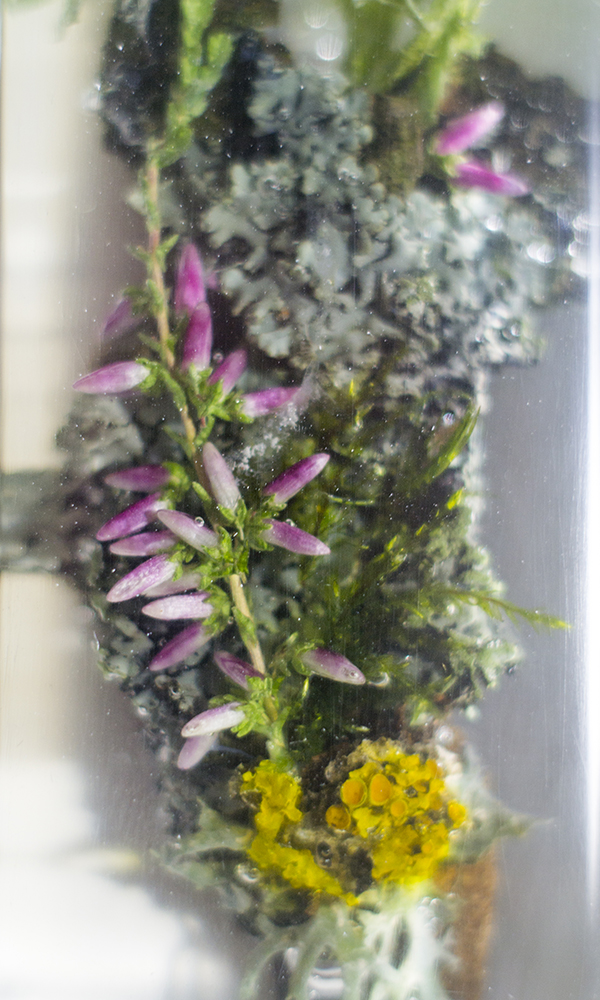
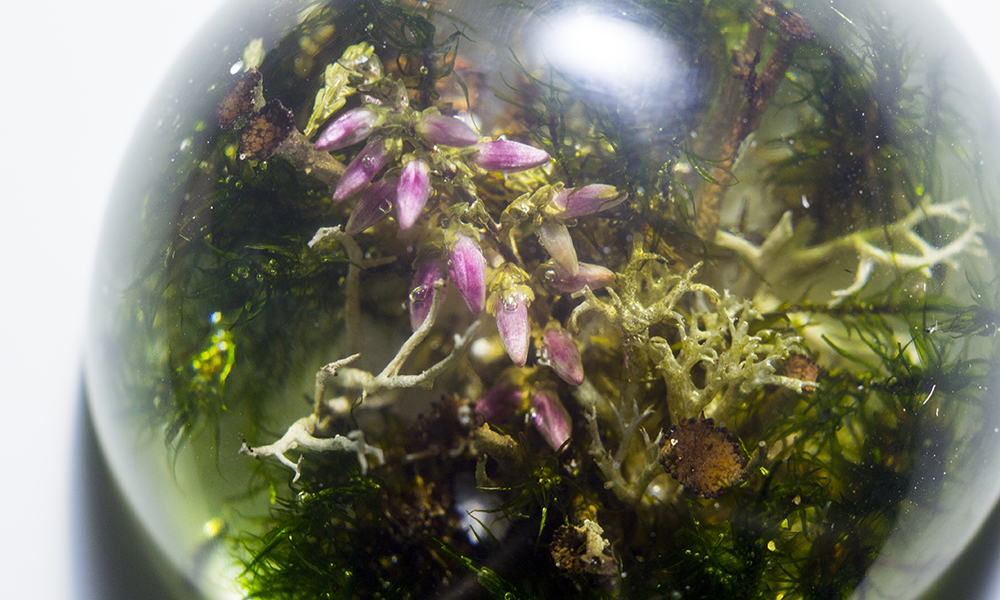
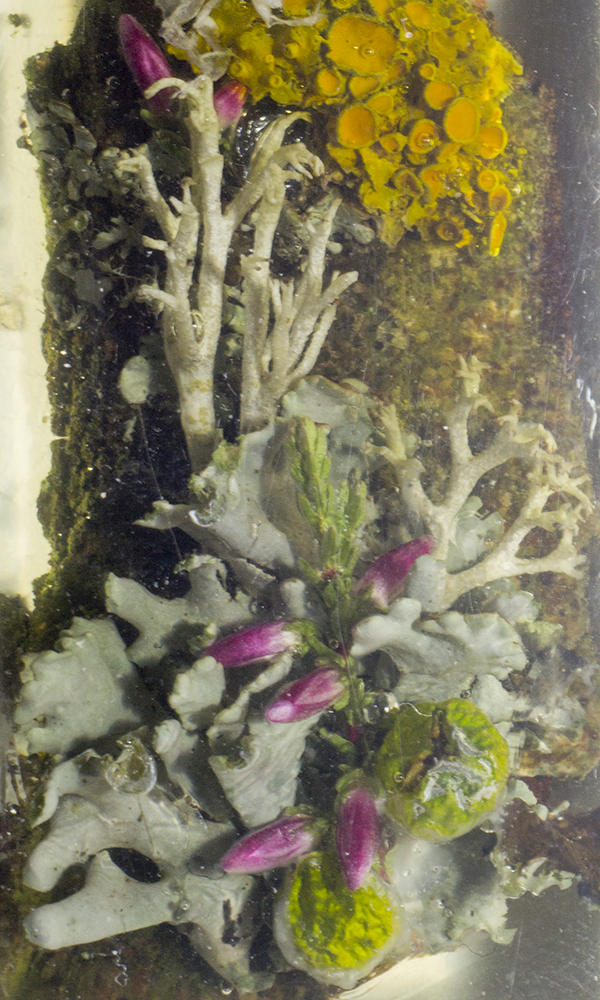
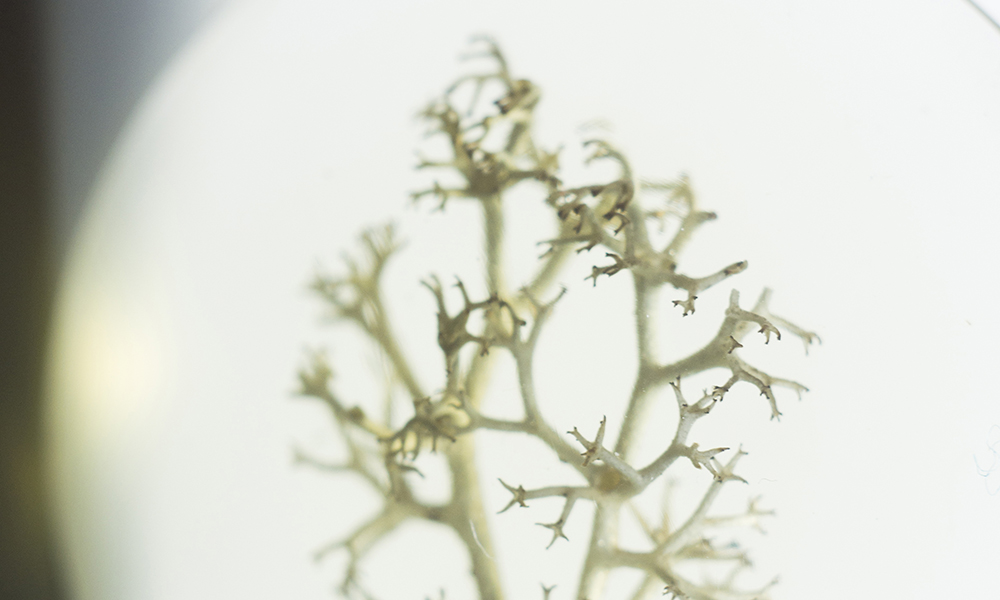
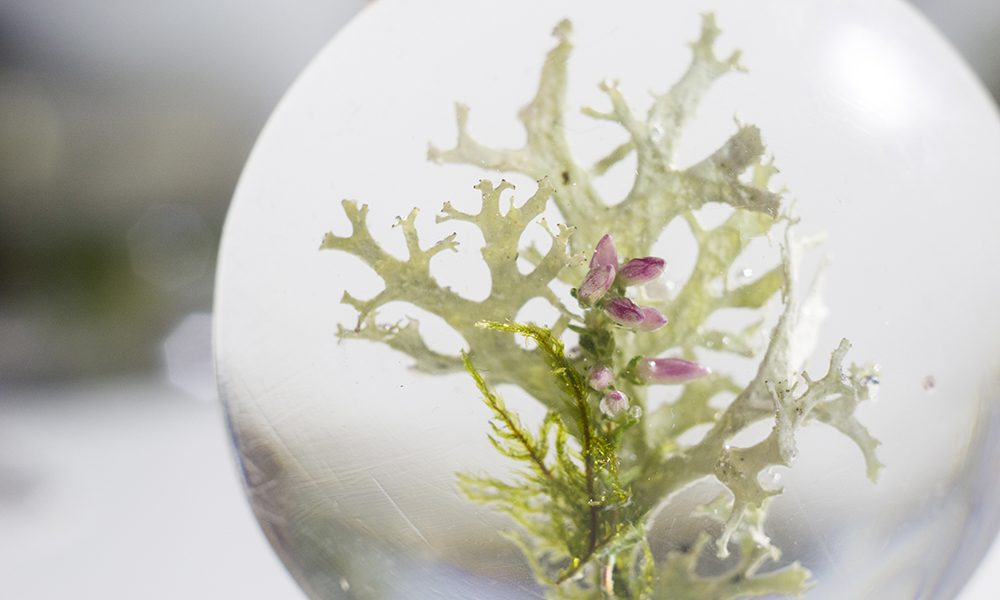
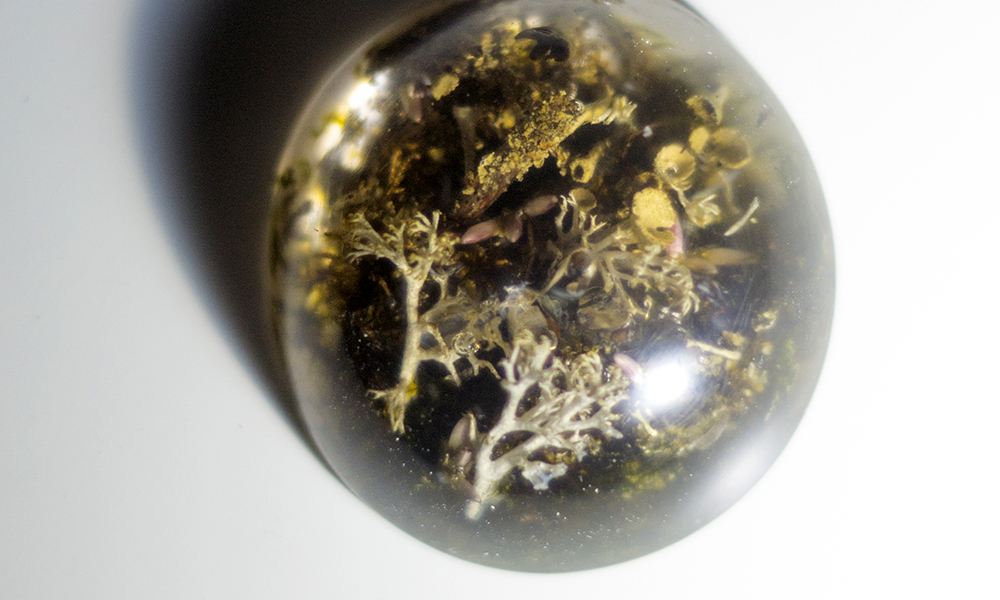
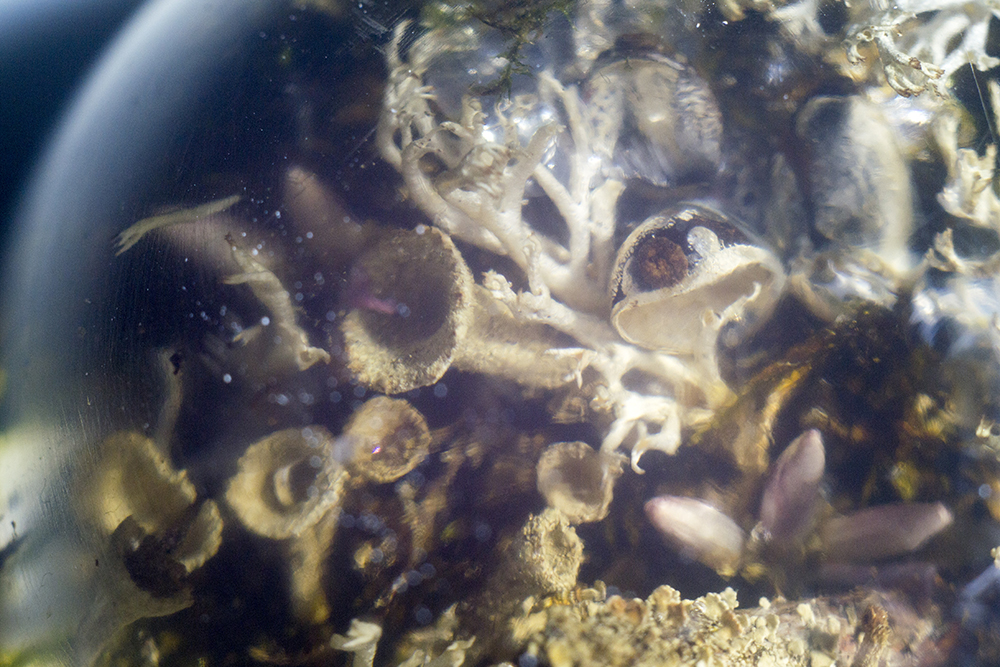
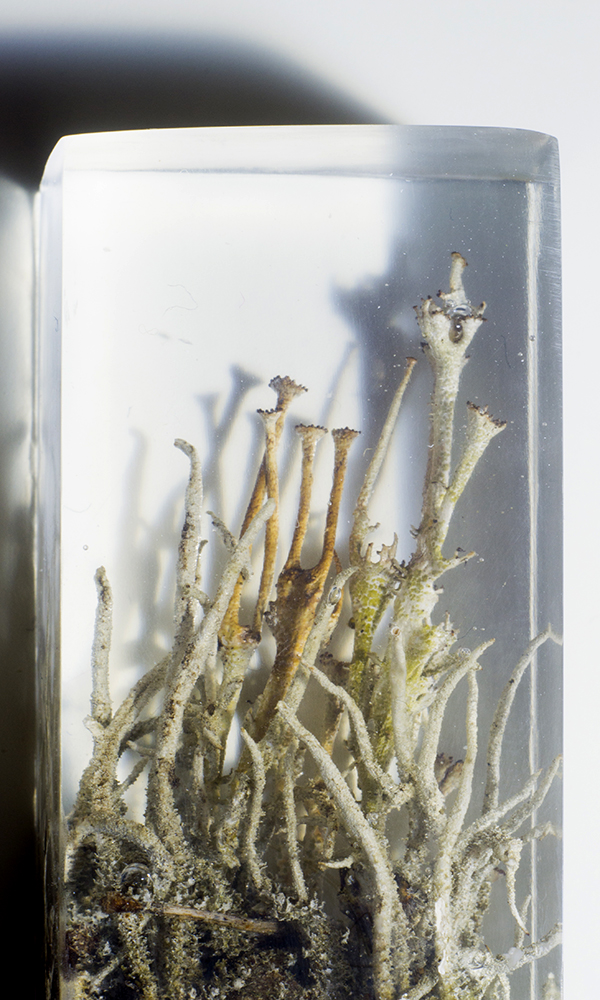
In Reverie, Wawrzyniuk transforms fragments of mosses, lichens, and small plants into sculptural objects encased in transparent resin. Suspended within cubes and spheres, these delicate organic forms appear simultaneously preserved and isolated — held in a state between life and stillness.
The project emerges from a desire to protect what is fragile and easily overlooked. By enclosing modest forest specimens within clear geometric volumes, Wawrzyniuk elevates them to the status of precious artifacts. The resin functions both as a shield and as a barrier: it safeguards the material from decay and human interference, yet it also separates it from its original ecosystem.
Each specimen is carefully collected in the artist’s homeland, documented with attention to species and precise location. This act of recording becomes part of the work itself — a gesture of care, responsibility, and witnessing. The geometric forms emphasize the singularity of each organic detail, inviting viewers to reconsider scale, value, and proximity.
Reverie reflects on preservation not as possession, but as contemplation. It asks whether protection can coexist with intervention, and what it truly means to safeguard nature in a world that constantly alters it.
SARKS is a series of large-scale oil paintings that confront the viewer with the raw, visceral presence of flesh. Wawrzyniuk shifts the focus from the idealised body to its material condition — exposed, vulnerable, undeniably physical.
The title refers to the Greek term sarks, meaning flesh as corporeal substance, set in tension with soma, the living, sensing body. Within this conceptual framework, the paintings explore the fragile boundary between spirit and matter, consciousness and tissue. By depicting meat — detached from the living organism — Wawrzyniuk invites reflection on what unites all sentient beings at the most fundamental level.
The series draws on the long tradition of meat imagery in art history. It resonates with the symbolic charge of Baroque vanitas painting and echoes the uncompromising physicality of Rembrandt’s Slaughtered Ox. For Wawrzyniuk, these historical references are not quotations but points of departure — a way to reconsider how flesh has functioned as a site of mortality, sacrifice, and shared biological reality.
Rather than presenting meat as spectacle, SARKS treats it as a mirror. The paintings confront viewers with their own embodied condition, asking where humanity resides: in spirit, in intellect, or in the vulnerable material from which we are made.
Wawrzyniuk’s work investigates organic life as a site of transformation, preservation, and abstraction. Moving between painting and sculpture, she begins with attentive observation of mosses and lichens, isolates and protects their fragile presence in resin, and ultimately allows their forms to dissolve into fluid, biomorphic constellations. Across these projects, nature is neither documented nor romanticised, but reconfigured — emerging as a dynamic field of becoming, where materiality, memory, and perception continuously intersect.